

Open source and accessibility
Local speech input for more accessible digital work.
TypeWhisper is opening selected building blocks for local speech input, assistive text workflows, and more accessible digital work. The goal is a reusable open-source core for people who cannot type continuously, quickly, or without pain – local, documented, and independent from any single cloud service.
In the app today

Starting point
The access gap is practical.
Many digital tools still assume that people can type quickly, use a mouse precisely, and recover from repetitive input without pain. That leaves out people with motor limitations, chronic pain, fatigue, tremor, visual strain, dyslexia, temporary injuries, and many everyday work contexts where typing is the wrong interface.
Start from local, user-controlled speech.
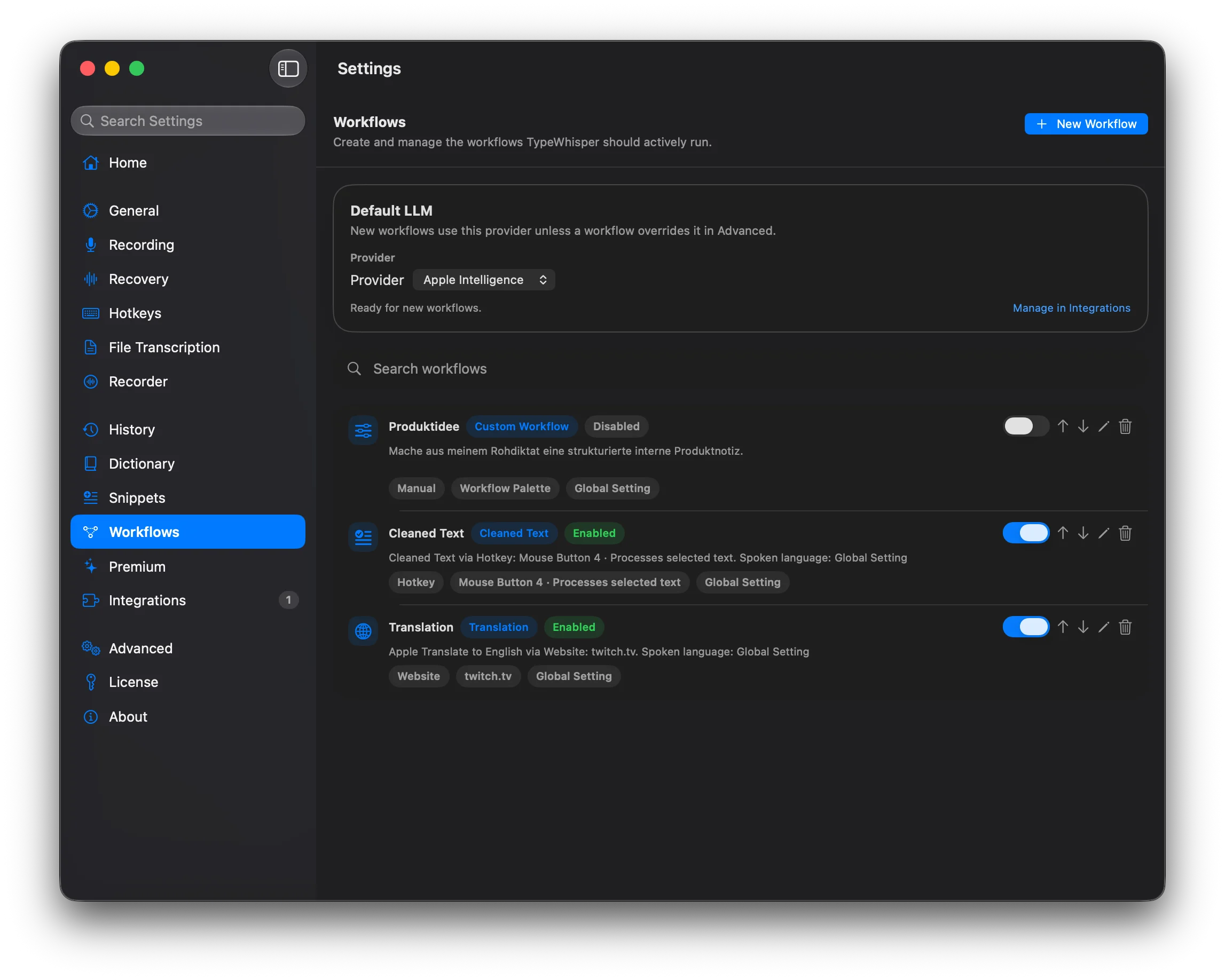
The initiative builds on TypeWhisper surfaces that already matter for accessibility: system-wide dictation, file transcription, assistive text workflows, local engines, plugin extension points, an HTTP API, and a CLI. The goal is not a separate grant-only product, but reusable pieces that make local speech input easier to inspect, adapt, and deploy.
Principles
Principles of the initiative
Funding can help the work move faster, but it should not change the trust model that makes TypeWhisper useful.
Local by default
Speech and text workflows should be usable without forcing audio or drafts through a remote service.
Assistive in real workflows
The work should cover dictation, correction, rewriting, snippets, and repeatable text actions across normal desktop tools.
Open where useful
Reusable docs, examples, integration patterns, and technical building blocks should be public when they can help others.
Independent
No paid recommendations, no hidden placements, no in-app advertising, and no licensing rights through funding.
Planned open-source building blocks
What should become open.
The plan is to produce reusable public building blocks that can be used independently from the commercial TypeWhisper product.
Local speech input patterns
Guides and integration examples for local speech engines, privacy-preserving transcription, and user-controlled engine selection.
Assistive text workflow templates
Reusable templates for cleaning up dictated text, transforming selected text, and reducing repetitive typing.
Interface examples
Technical examples for CLI, local API, plugins, and organizational deployment patterns.
Documentation and test material
Material for workplace, education, and advisory settings, privacy review, accessibility testing, and pilot projects.
Impact
How impact should become visible
In pilot projects, we can measure together which building blocks actually help in daily work and where barriers remain.
- how much typing and mouse use can be reduced
- which dictation, correction, and text-output workflows help in real work
- how understandable setup, documentation, and example workflows are
- where local processing matters compared with cloud services
- which barriers remain around dictation, correction, and output into target apps
Audience and partners
Who it should help.
The initiative is aimed at three groups that need speech input to be adaptable, inspectable, and privacy-aware.
- Users: people who cannot type well because of motor limitations, pain, fatigue, tremor, dyslexia, visual impairment, or temporary injury.
- Organizations: advisory centers, education providers, employers, inclusion projects, and nonprofit operators.
- Developers: teams that want to reuse local speech input, workflows, plugins, or accessible text automation.
Partners we want to talk to.
The useful first step is a concrete pilot or funding conversation, not a broad logo exchange.
- Accessibility and inclusion organizations
- Nonprofit operators and foundations
- Research, education, and civic tech
- Open-source, AI, and speech teams
- Employers and pilot workplaces
Status
Project status
Available today
System-wide dictation, workflows, local engines, plugin extension points, HTTP API, and CLI.
Planned as open building blocks
Documentation, example workflows, integration guides, test material, and selected technical interfaces.
Wanted
Pilot partners, funding partners, accessibility feedback, nonprofit operators, employers, and research partners.
The initiative describes planned and partly existing open-source and accessibility building blocks. TypeWhisper does not replace medical advice and is not positioned as a medical device.
Contact
Working on accessibility, inclusion, or public-interest speech tools?
Send a short note about the people you support, the workflow you want to improve, and whether you are thinking about funding, a pilot, or technical collaboration.